The Rise of Agentic AI: Beyond Chollet's Predictions
Introduction: The Dawn of Autonomous Intelligence
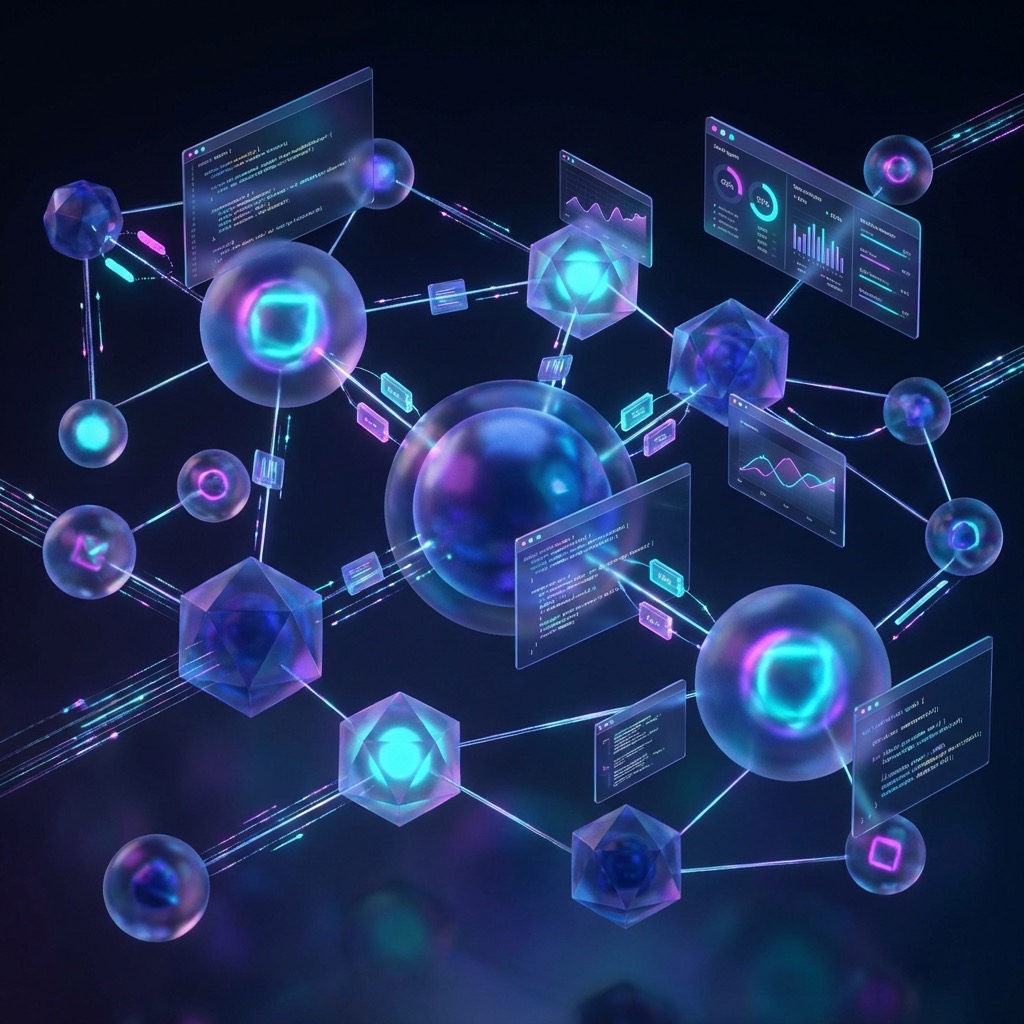
The artificial intelligence landscape is experiencing a fundamental shift. We're moving beyond simple chatbots and recommendation systems into an era where AI systems can autonomously plan, execute, and adapt to achieve complex goals. This transformation, known as agentic AI, represents one of the most significant technological developments of our time.
François Chollet, the creator of Keras and a prominent AI researcher, has long advocated for AI systems that demonstrate genuine intelligence through abstraction and generalization. While his ARC (Abstraction and Reasoning Corpus) benchmark challenged the AI community to build systems capable of human-like reasoning, the rise of agentic AI is taking us in directions even beyond his initial predictions.
What Is Agentic AI?
Agentic AI refers to artificial intelligence systems that possess agency—the ability to independently pursue goals, make decisions, and take actions in dynamic environments without constant human intervention. Unlike traditional AI that responds to specific prompts or follows predetermined scripts, agentic AI can:
- Break down complex objectives into manageable subtasks
- Develop and execute multi-step plans
- Adapt strategies based on feedback and changing circumstances
- Learn from successes and failures
- Interact with multiple tools, APIs, and systems autonomously
- Make contextual decisions that balance competing priorities
Think of the difference between a calculator (traditional AI) and a financial advisor (agentic AI). The calculator waits for your input and performs specific operations. The advisor understands your financial goals, researches market conditions, creates investment strategies, monitors performance, and adjusts recommendations over time—all with minimal ongoing instruction.
Chollet's Vision and the Reality Gap
François Chollet's work has centered on a crucial insight: true intelligence requires the ability to adapt to novel situations using minimal experience. His ARC benchmark tests AI systems on visual reasoning tasks that humans find trivial but that confound even advanced neural networks.
Chollet predicted that achieving human-level AI would require breakthroughs in abstraction, reasoning, and generalization—capabilities that pure pattern recognition cannot deliver. He was skeptical of approaches that relied solely on scaling up training data and model parameters.
However, the emergence of agentic AI systems has revealed something unexpected. While we haven't solved the fundamental abstraction challenges Chollet identified, we've discovered that large language models, when combined with the right architectural patterns, can exhibit remarkable agency. These systems may not reason in the way Chollet envisioned, yet they can accomplish complex real-world tasks that require planning, tool use, and adaptation.
Key Characteristics of Modern Agentic AI
Autonomous Planning and Execution
Modern agentic systems can decompose high-level objectives into actionable steps. When tasked with "analyze our competitor's pricing strategy," an agentic AI might:
- Identify key competitors in the market
- Search for publicly available pricing information
- Extract and structure the data
- Perform comparative analysis
- Generate insights and recommendations
- Create visualizations to communicate findings
Each step builds on the previous one, and the system can adjust its approach if it encounters obstacles.
Tool Use and Integration
One of the most powerful aspects of agentic AI is its ability to interact with external tools and systems. These agents can:
- Execute code to perform calculations or data analysis
- Query databases and APIs for real-time information
- Use web browsers to research current information
- Generate and manipulate files, spreadsheets, and documents
- Integrate with business software like CRM systems, project management tools, and communication platforms
This tool-using capability transforms AI from an advisor into an executor—a system that can actually get work done rather than just suggesting what should be done.
Iterative Refinement and Self-Correction
Perhaps most impressively, agentic AI systems can evaluate their own outputs and iterate toward better solutions. When an initial approach fails or produces suboptimal results, these systems can:
- Recognize errors or shortcomings in their work
- Hypothesize about what went wrong
- Try alternative approaches
- Validate results before presenting them
This self-correcting behavior mimics human problem-solving and makes agents far more reliable for complex tasks.
Contextual Memory and Persistence
Advanced agentic systems maintain context across extended interactions. They can:
- Remember previous conversations and decisions
- Build on prior work without starting from scratch
- Maintain awareness of project status and goals
- Track what has been tried and what remains to be done
This persistence enables agents to work on projects that span days or weeks, not just single conversations.
Real-World Applications Transforming Industries
Software Development
Agentic AI is revolutionizing how software is built. Development agents can:
- Analyze codebases to understand architecture and patterns
- Implement new features based on requirements
- Write comprehensive test suites
- Debug issues by examining logs and error traces
- Refactor code for better performance or maintainability
- Keep documentation synchronized with code changes
Companies are reporting productivity increases of 30-50% when developers work alongside agentic AI assistants, particularly for routine implementation tasks and bug fixes.
Customer Service and Support
Customer service agents powered by agentic AI go far beyond simple chatbots:
- They can access customer history across multiple systems
- Process refunds, exchanges, and account modifications
- Escalate complex issues to human agents with full context
- Learn from resolution patterns to improve over time
- Proactively identify and address potential problems
Organizations implementing these systems are seeing resolution times decrease by 60-70% while customer satisfaction scores improve.
Research and Analysis
Research agents can autonomously conduct comprehensive investigations:
- Gather information from multiple sources
- Synthesize findings into coherent reports
- Identify patterns and insights humans might miss
- Validate claims against authoritative sources
- Generate hypotheses for further investigation
This capability is transforming competitive intelligence, market research, and due diligence processes.
Business Process Automation
Agentic AI is enabling automation of processes that previously required human judgment:
- Invoice processing with exception handling
- Contract review and risk assessment
- Compliance monitoring across changing regulations
- Supply chain optimization responding to dynamic conditions
- Hiring workflows from resume screening through initial interviews
The key difference from traditional robotic process automation (RPA) is that agentic systems can handle variability and exceptions without rigid rule-based programming.
Technical Architecture: How Agentic AI Works
Understanding the technical foundations of agentic AI helps businesses evaluate and implement these systems effectively.
The ReAct Pattern: Reasoning and Acting
Many agentic systems use the ReAct (Reasoning and Acting) pattern, which interleaves thinking and doing:
- Thought: The agent considers what to do next based on the current goal and context
- Action: It executes a specific tool or action
- Observation: It processes the results
- Repeat: The cycle continues until the goal is achieved
This pattern allows agents to dynamically adapt their plans based on what they learn.
Multi-Agent Architectures
Increasingly sophisticated systems employ multiple specialized agents working together:
- A planner agent breaks down high-level goals
- Executor agents handle specific tasks like web research or data analysis
- A critic agent evaluates outputs for quality and correctness
- A coordinator agent manages communication between specialists
This division of labor mirrors how human teams operate and can produce better results than monolithic systems.
Memory Systems
Effective agentic AI requires sophisticated memory management:
- Short-term memory: Maintains context within a single conversation or task
- Long-term memory: Stores knowledge, preferences, and learned patterns
- Episodic memory: Records specific past interactions and their outcomes
- Semantic memory: Maintains general knowledge about the domain
Advanced systems use vector databases and retrieval mechanisms to efficiently access relevant memories.
Safety and Guardrails
Production agentic systems incorporate multiple safety layers:
- Permission systems that limit what actions agents can take
- Human-in-the-loop approval for high-stakes decisions
- Monitoring systems that detect unusual behavior
- Sandboxed execution environments
- Audit trails for all agent actions
These safeguards are essential for deploying agents in business-critical applications.
Beyond Chollet: Where Agentic AI Diverges from Predictions
The rise of agentic AI has unfolded differently than many experts predicted:
Scaling vs. Efficiency
Chollet argued that we needed more efficient learning algorithms rather than simply scaling up models. While the debate continues, practical agentic systems have emerged from scaled-up language models combined with clever architectural patterns. The effectiveness of these systems suggests that scale, combined with the right structure, can produce agency even without solving fundamental reasoning challenges.
Narrow vs. General Capabilities
Chollet focused on general intelligence that could handle any novel task. Current agentic systems are more specialized but surprisingly versatile within domains. A software development agent may not be able to solve abstract reasoning puzzles, but it can handle an enormous variety of programming tasks it has never explicitly seen before.
Symbolic vs. Neural Approaches
Many predicted that achieving agency would require hybrid systems combining neural networks with symbolic reasoning. While some systems do incorporate symbolic elements, pure neural approaches augmented with tools and memory have proven remarkably capable.
The Role of Embodiment
Traditional AI research often emphasized the importance of embodiment and sensorimotor experience. Agentic AI has shown that significant agency can emerge in purely digital environments where "embodiment" means interacting with software tools and APIs rather than physical objects.
Challenges and Limitations
Despite rapid progress, agentic AI faces significant challenges:
Reliability and Hallucination
Agentic systems can still generate incorrect information or take inappropriate actions. While self-correction mechanisms help, they don't eliminate errors. Critical applications require human oversight and verification.
Cost and Efficiency
Running sophisticated agents can be expensive, particularly when they make multiple API calls or execute numerous reasoning steps. Organizations must balance capability against operational costs.
Explainability
Understanding why an agent took specific actions can be difficult, especially in complex multi-step processes. This opacity creates challenges for debugging, auditing, and building trust.
Security Concerns
Agentic systems that can execute code and interact with multiple systems present new security vectors. Prompt injection attacks, data leakage, and unintended actions are real risks that require careful mitigation.
Ethical Considerations
As agents become more autonomous, questions arise about accountability, bias, and the appropriate scope of machine decision-making. Organizations must establish clear ethical guidelines for agent deployment.
The Future: What's Next for Agentic AI
Several trends are shaping the evolution of agentic AI:
Increased Specialization
We'll see more domain-specific agents optimized for particular industries or functions—legal agents, medical diagnosis agents, financial planning agents, each with deep expertise and appropriate safeguards.
Multi-Modal Capabilities
Future agents will seamlessly process and generate text, images, audio, and video, enabling richer interactions and broader application domains.
Collaborative Human-Agent Teams
Rather than replacing humans, agents will increasingly function as team members, handling routine aspects of work while escalating complex decisions and creative challenges to human colleagues.
Federated and Edge Deployment
Organizations will deploy agents that run locally or on private infrastructure, addressing data privacy and security concerns while maintaining the benefits of agentic capabilities.
Standardization and Frameworks
As the field matures, we'll see standardized protocols for agent communication, common frameworks for building agents, and established best practices for deployment and governance.
Strategic Implications for Businesses
Organizations should consider several strategic questions:
Where Should We Start?
Begin with well-defined processes that have clear success criteria and manageable risk. Customer support, data analysis, and content generation are often good starting points.
Build vs. Buy?
For most organizations, leveraging existing agentic platforms and tools makes more sense than building from scratch. Focus your development efforts on domain-specific customization and integration.
How Do We Measure Success?
Establish clear metrics: time saved, accuracy improvements, cost reductions, customer satisfaction increases. Track both quantitative outcomes and qualitative feedback from users working with agents.
What About Our Workforce?
View agentic AI as augmentation rather than replacement. Invest in training your team to work effectively with agents, and redeploy human talent toward higher-value activities that require creativity, empathy, and strategic thinking.
How Do We Manage Risk?
Implement governance frameworks that specify what agents can do independently, what requires approval, and what remains exclusively human responsibility. Start with conservative boundaries and expand as you build confidence.
Conclusion: Embracing the Agentic Revolution
The rise of agentic AI represents an inflection point in how businesses operate and how work gets done. While we may not have achieved the type of abstract reasoning François Chollet envisioned, we've discovered a practical path to AI systems that exhibit genuine agency within bounded domains.
For software consultancies and technology organizations, this moment presents both opportunity and imperative. The opportunity lies in leveraging agentic AI to deliver more value to clients, operate more efficiently, and tackle problems previously out of reach. The imperative comes from the rapid pace of change—organizations that fail to adapt risk falling behind competitors who embrace these capabilities.
The key is to approach agentic AI strategically: start with clear use cases, implement appropriate safeguards, measure outcomes rigorously, and iterate based on what you learn. The technology is ready for production deployment in many contexts, but success requires thoughtful implementation that balances capability with control.
As we move beyond Chollet's predictions into uncharted territory, one thing is certain: agentic AI is not a distant future possibility but a present reality reshaping how intelligent work gets done. The question isn't whether to engage with this technology, but how to do so in ways that create value while managing risk effectively.
The agentic revolution is here. How will your organization respond?
Ready to Explore Agentic AI for Your Business?
Contact our team to discuss your specific challenges and opportunities. We help organizations design, implement, and scale agentic AI solutions that deliver measurable results while maintaining appropriate human oversight and control.
Get Started Today